By Lalit Gargg
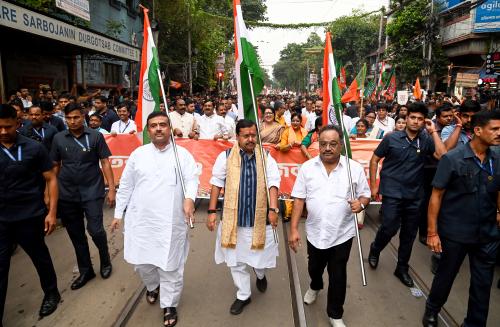
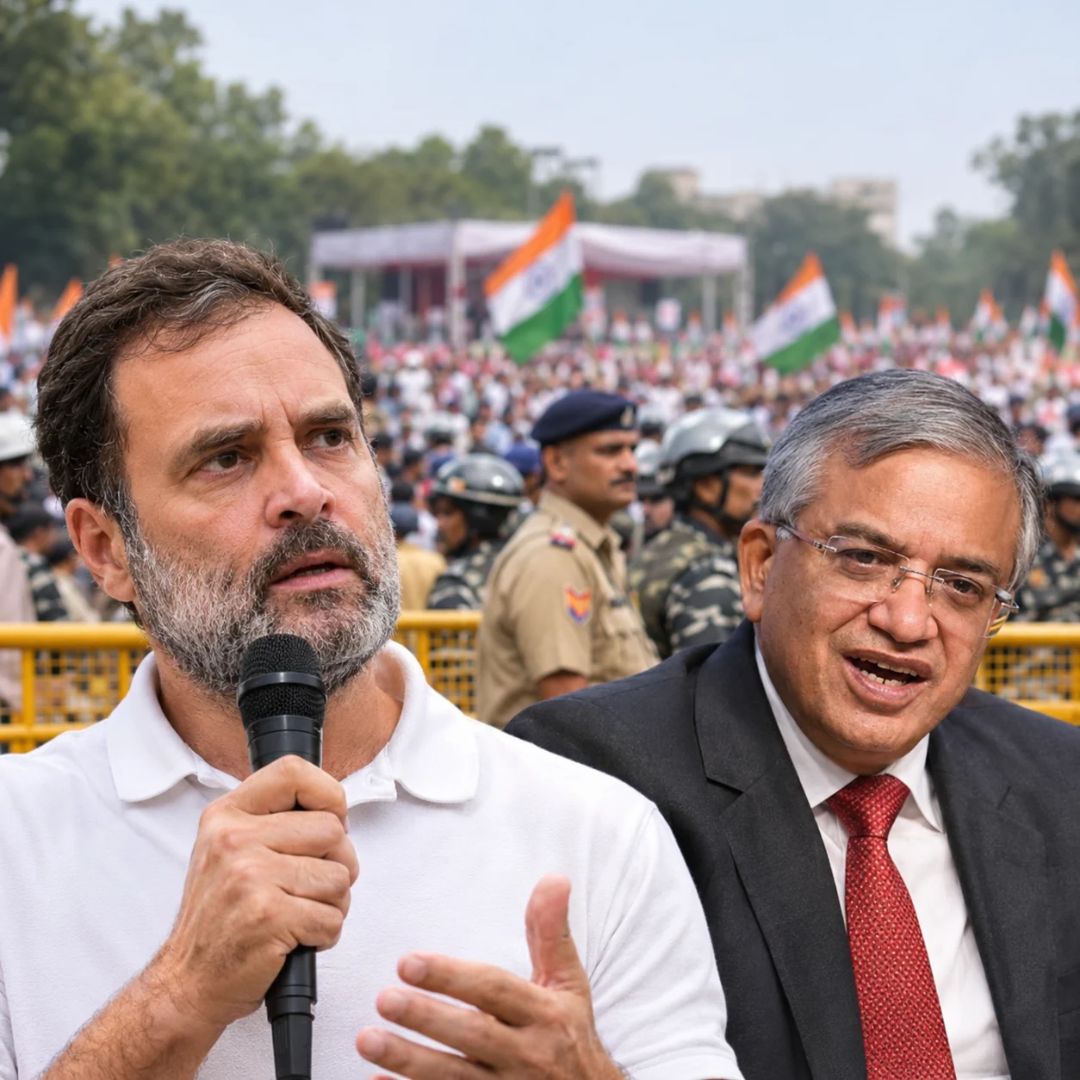
Democracy is not merely a mechanism for changing governments; it is a living system founded on public aspirations, citizens’ rights, accountability and meaningful political dialogue. Its strength is determined not only by the performance of the ruling party but equally by the responsibility, ideological maturity and commitment to public welfare demonstrated by the opposition. However, when the focus of opposition politics shifts from the fundamental concerns of the people to opposing the government, launching personal attacks on its leadership and repeatedly making political allegations, questions about the true strength and purpose of democracy inevitably arise. The gathering of nearly twenty opposition parties under the leadership of the Congress at Delhi’s Ramlila Maidan, raising a united voice over the issue of alleged ‘vote theft’, calls for a serious political assessment. The question is not whether the opposition has the right to organise a rally, but what such gatherings ultimately contribute to democracy and the welfare of ordinary citizens.
Historically, Ramlila Maidan has been a witness to mass movements, political awakening and democratic resistance. A gathering here cannot be viewed merely as a demonstration of political strength; its message and underlying purpose also deserve careful evaluation. By bringing its alliance partners onto a common platform, the Congress sought to project political unity. A target of mobilising ten lakh people was reportedly announced, but according to available accounts, the actual turnout was considerably lower than the claim. Nevertheless, the significance of such an event should not be judged solely by the size of the crowd, but by the substance of its political message. Unfortunately, the rally once again appeared dominated by familiar allegations, repetitive political speeches and the same anti-government rhetoric that has characterised opposition politics for a considerable period.
The opposition has raised serious concerns regarding alleged vote theft and the Special Intensive Revision (SIR) of electoral rolls. Questioning the fairness of the electoral process is not only a legitimate right of the opposition in a democratic system but also an important part of its responsibility. Every eligible voter's name must be protected on the electoral rolls, and no qualified citizen should be deprived of the right to vote. However, safeguarding democratic rights requires not merely allegations but also credible evidence and factual substantiation. Among the names reportedly removed from electoral rolls are those of deceased persons, individuals who have permanently shifted elsewhere and voters registered at more than one location. The Election Commission has also maintained that decisions relating to the SIR process were taken with the concurrence of all three Election Commissioners. Judicial scrutiny and directions concerning this process have also come into consideration. Therefore, any final conclusion on the matter must be based on verifiable facts, credible evidence and judicial examination. It is the responsibility of the opposition to demand transparency from the Election Commission, expose discrepancies in electoral rolls and make concrete efforts to protect the rights of eligible voters. However, merely raising the slogan of ‘vote theft’ cannot strengthen public confidence in democratic institutions. If the opposition is genuinely committed to protecting voting rights, it must strengthen its organisational machinery by appointing Booth Level Agents (BLAs) at every polling station, scrutinising electoral rolls, collecting evidence of genuine irregularities and ensuring justice for affected citizens. Democracy is protected less by slogans and more by sustained action on the ground.
There is another important dimension to this rally. What is the ideological foundation of the political unity displayed by the Congress and its alliance partners? Is this unity based on a shared vision of the economy, employment policies, agricultural reforms, quality education, healthcare, inflation control, corruption-free governance, women's safety, the future of young people and social justice? Or is its principal objective simply to oppose the Narendra Modi government and create a political atmosphere against those in power? When opposition to a particular leader or government becomes the strongest binding force of an alliance, questions about its ideological coherence, political stability and future direction are inevitable. Opposition to the ruling establishment, by itself, cannot constitute a political philosophy. In a democracy, the opposition is not merely a critic; it is also expected to formulate credible alternatives. Serious parliamentary debates on legislation, factual scrutiny of government policies, alternative proposals on economic and social challenges, and effective representation of people's concerns before institutional forums constitute its fundamental responsibilities. However, when political discourse becomes confined to allegations, personal jibes and protest demonstrations, the genuine concerns of the people gradually recede into the background. The opposition must understand that criticising the Prime Minister and demonstrating its own capability as a credible alternative to his leadership are two entirely different propositions. The former represents political opposition; the latter is the real test of democratic leadership.
Today, India is confronted with several fundamental challenges. Quality employment opportunities for young people, farmers' incomes and agricultural productivity, the economic security of small traders, expansion of educational and healthcare facilities, environmental protection, urban mismanagement, widening economic inequalities and women's safety are not the concerns of any single political party; they are national concerns demanding collective attention. Did the rally at Ramlila Maidan succeed in presenting a concrete alternative programme on these issues? Did the opposition explain what policies it would adopt to address these challenges? Did it place before the nation a common vision of development? The answers to these questions will determine the real political significance of the rally. It is equally important to recognise that mobilising crowds and winning public confidence are two entirely different things in a democracy. Crowds can assemble in response to momentary political excitement, organisational strength or a sentiment of protest. However, lasting public trust is earned through ideas, policies, conduct and tangible results. Political parties must not labour under the illusion that impressive platforms, forceful speeches and demonstrations of unity will automatically secure the confidence of the people. Today's voter is considerably more aware and discerning. People no longer want to hear only what the government has done wrong; they also want to know what the opposition intends to do to correct the situation.
For the Congress, this should be an occasion for serious introspection. As the country's oldest political party, it is expected to do much more than pursue a politics of opposition. The party is also expected to provide ideological leadership and play the role of a constructive opposition. Rahul Gandhi and other opposition leaders should channel their political energies towards issues that affect broad sections of society. Opposition unity will acquire genuine meaning only when it is founded on a shared positive agenda rather than a common sense of political negativity. It is essential for different political parties to rise above leadership rivalries and individual political ambitions and develop a consensus on issues of national interest. Ultimately, the vitality of democracy cannot be sustained merely through elections, rallies, slogans and political declarations of strength. It requires impartial institutions, protection of citizens' rights, accountability of political parties, freedom of thought and a governance system that remains sensitive to public welfare. The ruling establishment, too, must demonstrate the courage to listen to criticism and correct its shortcomings, while the opposition must fulfil its responsibility by raising questions supported by evidence and presenting practical solutions.
Democracy is not the exclusive property of any one political party; it is the shared heritage of the entire nation. The rally at Ramlila Maidan should not remain merely an occasion for the opposition to demonstrate its political strength. Rather, it should become an opportunity for introspection and a renewed commitment to public welfare. The real question is not how frequently the opposition can unite against the Modi government, but how effectively and consistently it can present a credible alternative for the country's future. Opposing those in power may be necessary to strengthen democracy, but supporting public welfare is far more important. Democracy is strengthened not by political roars but by ideas, not by crowds but by public trust, and not merely by criticising those in power but by demonstrating a concrete commitment to the welfare of the people. This should be the most significant message emerging from the political resonance of Ramlila Maidan.