Vicky Nanjappa
New Delhi, Sep 28 (IANS) The cross-Line of Control military operations carried out on September 29, 2016, marked a decisive paradigm shift in India's national security strategy, establishing a high-precision deterrence model against cross-border terrorism sponsored by Pakistan.
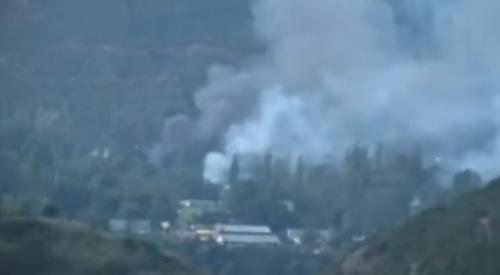
Ten years ago, on September 29, 2016, the Indian Army carried out surgical strikes on terrorist launch pads along the Line of Control (LoC), in a military response to the Uri terror attack.
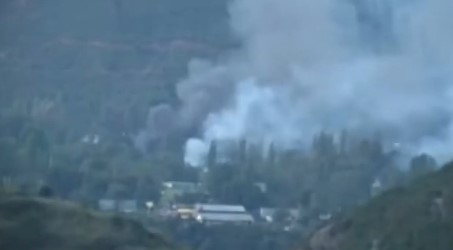
On September 18, 2016, heavily armed terrorists attacked an Army camp in Uri in Jammu and Kashmir, killing 19 soldiers.
The strikes marked a significant shift in India’s stated approach to cross-border terrorism.
Security experts say that this was a turning point in the battle against Pakistan-sponsored terrorism. The Narendra Modi government had rewritten the doctrine when it came to fighting against Pakistan-sponsored terror.
An official said Pakistan had long escaped consequences after terror attacks allegedly carried out with the involvement or support of groups based in the country. At most, India would issue a demarche to the Pakistani envoy.
“India would condemn an attack, raise it internationally and hand over dossiers seeking action against those responsible. The approach allowed Pakistan to assume that India would not go beyond diplomatic pressure,” the official said
The 26/11 Mumbai attacks were a classic example of how Pakistan yet again managed to get away, especially after such an audacious strike.
“However, the 2016 surgical strikes changed all of that. Pakistan got the message loud and clear that terror attacks would not be taken lightly anymore and there would be severe consequences too,” the official said.
Another official said the surgical strikes sent a strong message to Pakistan and set the stage for two subsequent major military operations.
The Balakot airstrike and Operation Sindoor were undertaken by the Indian armed forces to avenge the Pulwama and Pahalgam attacks, respectively. India had made it clear that it would not take such attacks lying down and that there would be severe consequences that would follow, the official said.
An Intelligence Bureau official said that in addition to the message that had been sent to Pakistan, the surgical strikes also gave a boost to the country’s security forces.
“When audacious attacks such as those in Uri and Pahalgam result in the loss of security personnel, it is important to respond firmly. If no action is taken, it can demoralise the security forces,” the official said.
Officials said the approach of the security forces changed after the surgical strikes. They realised that hitting Pakistan hard in response to its terror activities was also a way of avenging the loss of their colleagues.
This instilled a sense of confidence within the security apparatus. One indication of the boost the surgical strikes gave the security agencies was their subsequent ability to dismantle terror networks in Jammu and Kashmir.
There have been major attacks in the Valley post the surgical strikes, and each one of them has been answered with an iron fist. However, compared with what the Valley was witnessing before the 2016 surgical strikes, the situation has improved largely, officials say.
An official said that Prime Minister Narendra Modi rightly pointed out on Sunday that the surgical strikes made it clear that terrorism will be met with a strong and decisive response.
In his “Mann ki Baat” address, PM Modi said the surgical strikes presented a bold new example of India’s counter-terror policy in front of the entire world.
He even said that India had endured pain for a long time due to terror attacks and the surgical strikes were a response to that agony.
The surgical strikes were a bold move by the Indian armed forces, who were cleared by the Centre to enter Pakistan-occupied Kashmir (PoK) and dismantle terror camps and launch pads.
There were scores of launch pads in PoK, which were holding terrorists of the Lashkar-e-Tayiba, Jaish-e-Mohammad and Hizbul Mujahideen.
The surgical strikes destroyed these camps, as a result of which infiltration by terrorists was prevented to a large extent. After the strikes, Pakistan withdrew several other launchpads and even moved its terrorists further back, thus making infiltrations more challenging, an official said.