India Tribune Newsdesk
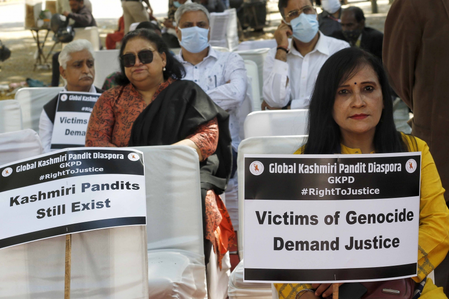
Chicago: January 19 continues to stand as a day of collective memory and unresolved pain for Kashmiri Hindus and Kashmiri Pandits across the world. Marked as Exodus Day or Holocaust Day, the date commemorates the mass displacement of the community from the Kashmir Valley in 1990 following threats, targeted killings and the rise of Pakistan-sponsored terrorism. Thirty-six years later, advocacy groups, community organisations and civil society voices renewed their demand for justice, restitution and a dignified, secure return to their ancestral homeland.
In the United States, Kashmiri Hindu advocacy organisations such as the Kashmir Hindu Foundation and Panun Kashmir described January 19 as a symbol of what they termed a systematic and deliberate process of ethnic cleansing. They said the exodus was not merely the loss of homes but the uprooting of an ancient civilisational presence, resulting in the erosion of cultural identity and historical continuity. Rejecting symbolic gestures and selective narratives, the groups asserted that justice could not be replaced by tourism-driven portrayals or collective amnesia.
Writer and political commentator Sunanda Vashisht underscored that the crimes committed against Kashmiri Hindus could not be reduced to a single historical moment. She described genocide as an ongoing process aimed at weakening or erasing identity-based communities perceived as threats. Echoing this sentiment, Panun Kashmir Convener Dr Agnishekhar said meaningful return and rehabilitation were possible only through the adoption of the Margdarshan Resolution, arguing that alternative approaches ignored the political, security and civilisational dimensions of the issue.
Community leaders also challenged dominant narratives around “Kashmiriyat,” asserting that Kashmir historically followed “Kashmir Deshachar,” a distinct ethos that was systematically dismantled. Demands were reiterated for declaring post-1989 property transactions as distress sales, nullifying them and restoring ownership to displaced families, along with a blanket ban on encroachment of abandoned properties.
In Jammu and Kashmir, Kashmiri Pandits marked the day with protests and tributes to those killed in terror attacks, renewing calls for a structured policy framework for dignified return, rehabilitation and long-term security. While former chief minister Farooq Abdullah stated that no one was preventing Pandits from returning, he expressed scepticism about large-scale permanent resettlement, citing the realities of families having rebuilt lives elsewhere. Deputy Chief Minister Surinder Choudhary, however, maintained that Kashmir was incomplete without Kashmiri Pandits and reiterated political support for their reintegration.
Adding a moral and cultural appeal, Dr Khwaja Farooq Renzushah of Kashmir Society International called upon occupants of Pandit properties to return homes and land to their rightful owners. He described the Pandits’ return as a historical and ethical imperative essential to restoring Kashmir’s legacy of Reshiyat, unity and pluralism. Rejecting claims that Pandits no longer wished to return, he emphasised that their emotional and cultural roots remained firmly tied to the Valley.
Across continents, the message remained consistent: justice, restitution and secure rehabilitation are not concessions but constitutional and moral obligations. The call was not only for physical return, but for the restoration of Kashmir’s pluralistic soul and the acknowledgment of a tragedy that continues to shape generations.
(With the input of IANS and other news report)