By Prashant Shah
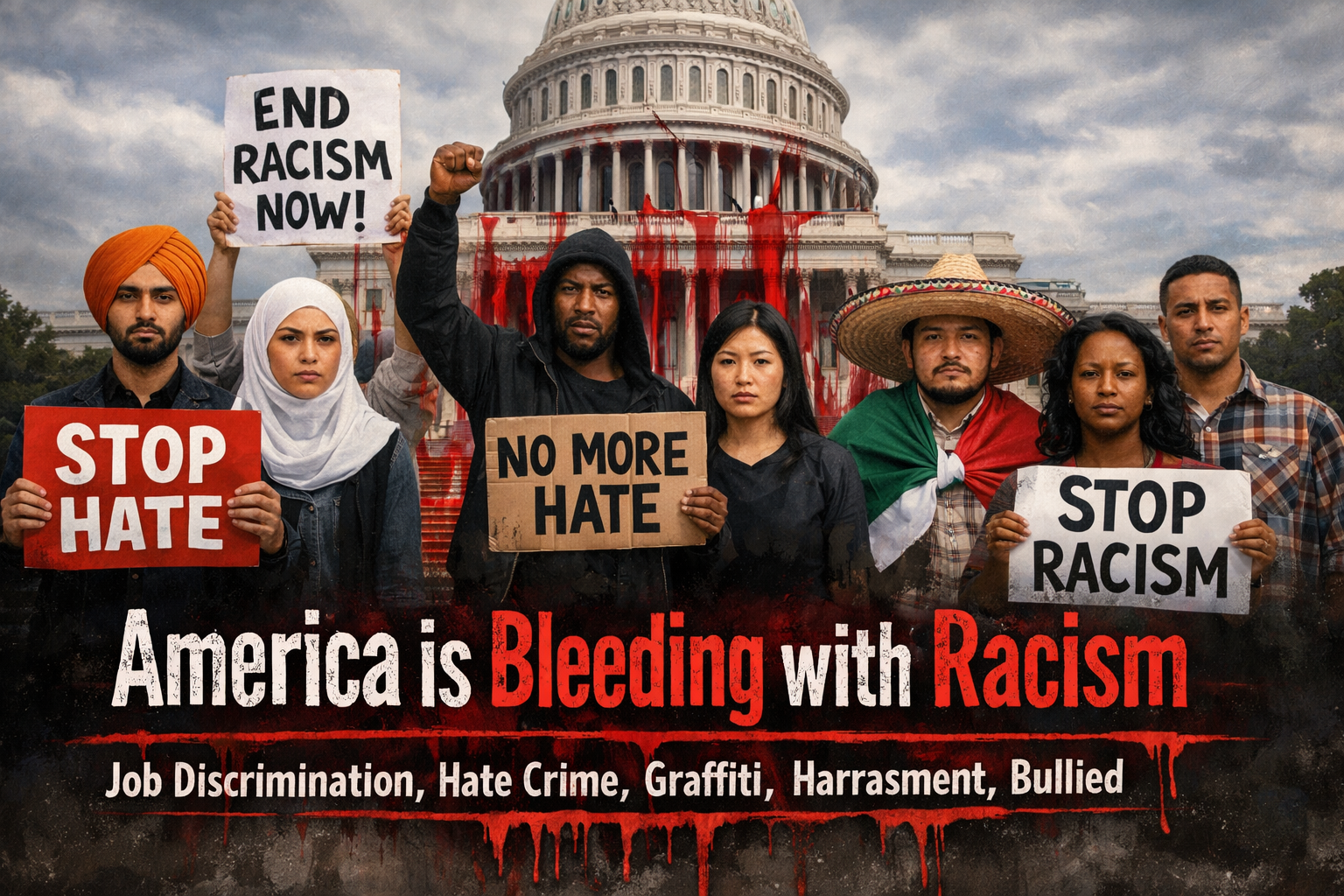
Syda Segovia Taylor’s January 4 Chicago Tribune article, comparing racism to a deadly cancer, does more than diagnose America’s condition—it exposes our collective denial. Cancer does not announce itself with a single dramatic symptom. It grows quietly, invading vital organs, weakening the body from within, until survival itself is threatened. Racism in America has followed the same cruel path. It is not a relic of the past or a single act of hatred caught on camera. It is a systemic disease that has embedded itself into the nation’s bloodstream, attacking every major system that sustains life: law, health care, education, economics, housing, and even the moral imagination of the country.
America continues to suffer from this cancer, and its health is declining. As the disease spreads unchecked, it leaves the nation vulnerable—fractured, exhausted, and open to other global ills that thrive in weakened states. The veins of this country, once meant to carry liberty and justice, are now clogged with the toxins of exclusion and fear. Racism has metastasized, shaping policies and practices that quietly determine who breathes easier, who lives longer, who is protected, and who is expendable. The result is a slow destruction of the social fabric, one that normalizes cruelty and numbs conscience.
Anyone who has witnessed cancer understands that survival demands brutal honesty and sustained treatment. There is no quick cure, no comforting illusion that time alone will heal the body. Fighting racism requires the same resolve. It demands that America confront the depth of its illness and commit to treatment at every level—individual, community, and institutional. No one is exempt. Racism does not only harm its direct victims; it poisons the entire body, distorting relationships, eroding trust, and hollowing out democracy itself.
The first stage of treatment begins within. Each of us must confront the inherited myths of superiority and inferiority that we carry, often unconsciously. These beliefs, left unexamined, shape our decisions, our silence, and our indifference. Healing requires humility—the willingness to let go of ego, to admit complicity, and to choose ethical behavior over comfort. Individual transformation is not a distraction from systemic change; it is its foundation. A society cannot heal if its people refuse to change.
But internal work alone is not enough. Racism thrives in isolation and silence, and it weakens when people come together in honest, sometimes painful, conversation. Communities must create spaces where stories can be told, grief acknowledged, and accountability embraced. Healing conversations are not about winning arguments; they are about restoring humanity. They require listening across differences—across race, religion, and culture—and recognizing that dignity is not a scarce resource. Hindus, Muslims, Sikhs, Christians, Jews, Black and people of all beliefs share a stake in this struggle because racism ultimately dehumanizes everyone it touches.
Mahatma Gandhi reminded the world that hatred cannot be driven out by hatred, only by love grounded in humanity. Love, however, is not passive. It is disciplined, courageous, and demanding. Embracing diversity is not about symbolic gestures or hollow slogans; it is about building systems that allow everyone to live to their fullest potential without fear. It means reimagining policies, reallocating resources, and dismantling structures that were designed to exclude. Love becomes real when it shapes law, education, and economic opportunity.
True transformation begins at the grassroots, when neighbors look each other in the eye and choose connection over division. It happens when people stand for one another in moments of need, when trust is built through small, spontaneous acts of care. This is the heart work of democracy—the slow, patient labor that turns abstract ideals into lived reality. From this soil, meaningful policy can grow.
The life America claims to want—just, free, and humane—is still possible. But it will not emerge from denial or nostalgia. It will be born only when love flows through the nation’s veins, replacing the toxins of racism with the energy of togetherness. The choice is stark, as it is with any deadly disease: commit to treatment, or accept decline. America must decide whether it wants to heal—or continue bleeding.