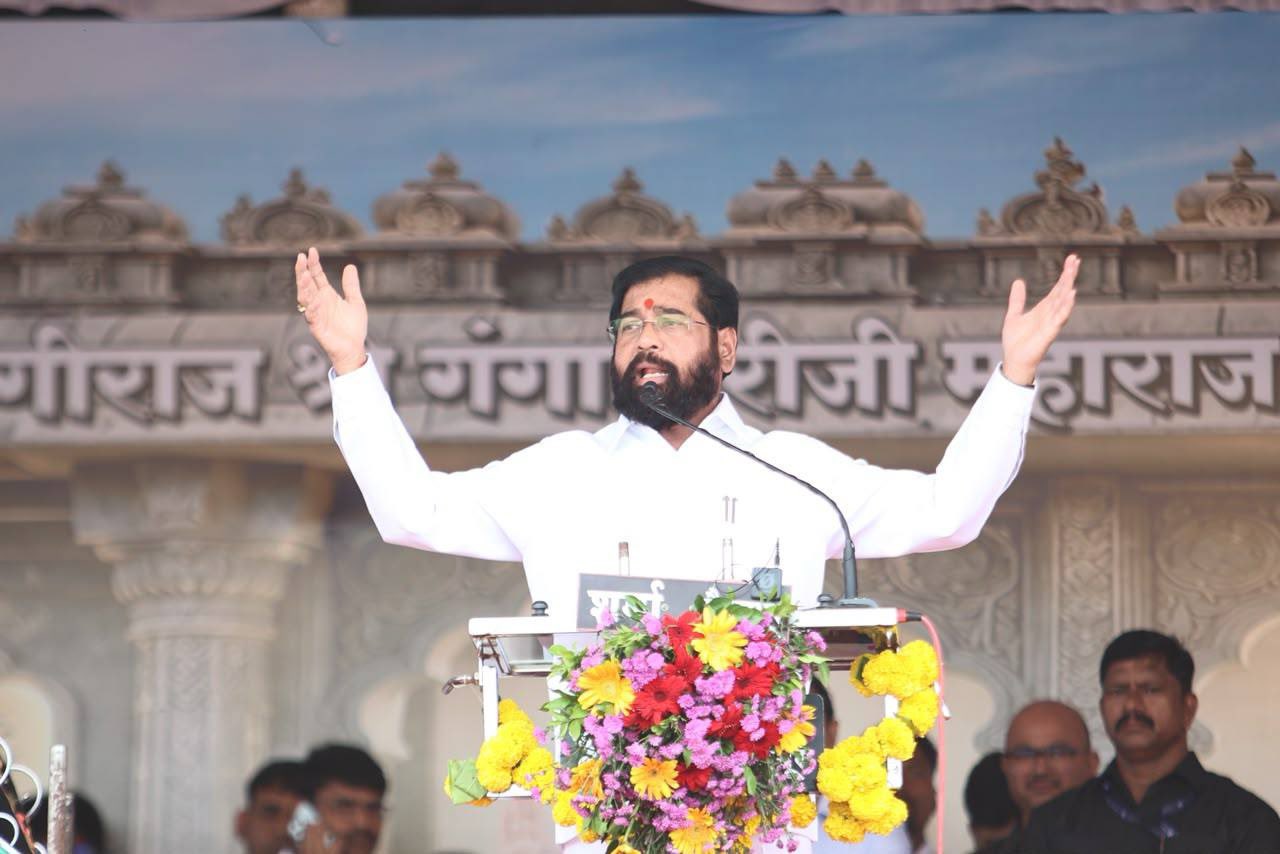
Mumbai, Aug 25 (IANS) Emphasising that rapid global development demands active participation, Deputy Chief Minister Eknath Shinde on Tuesday urged citizens and industry leaders to become “change makers” in driving the growth of India and Maharashtra.
Speaking at a Business Conclave, Shinde said the state government has taken decisive steps to turn not just Mumbai but the entire state into India’s primary growth engine.
He stressed that Maharashtra’s developmental vision goes beyond economic figures, aiming for an economy that is modern, sustainable, globally competitive and citizen‑friendly.
Acknowledging climate change as a critical challenge for a state with extensive coastlines and diverse geography, Shinde said environmental considerations are central to state planning. He informed that the State Climate Action Plan focuses on adaptation and emission reduction measures.
To tackle rising temperatures, urban flooding, sea‑level rise and pollution in coastal cities like Mumbai, the state is prioritising flood control, coastal protection, green cover expansion, rainwater management, sustainable transport and technology‑based planning.
Shinde said major infrastructure initiatives, including the Mumbai Metro, Coastal Road, Samruddhi Mahamarg, expressways, airports, ports and logistics hubs, are being accelerated to boost enterprise and job creation. He listed game-changing projects across the Mumbai Metropolitan Region (MMR), including Atal Setu (MTHL), Bullet Train, Metro Line 3 and Vadhavan Port. A 337 km metro network is under development in MMR with a focus on multi‑modal integration across rail, road, metro and water transport systems.
Rejecting a Mumbai‑centric development model, Shinde said the government is connecting regions like Vidarbha, Marathwada, Konkan and Western Maharashtra directly to the growth stream. Cities such as Nagpur, Pune, Nashik, Chhatrapati Sambhajinagar, Thane and Navi Mumbai are being transformed into self‑sustaining economic hubs through industrial parks, IT zones, logistics hubs and employment clusters.
According to Shinde, a roadmap is in place to double Mumbai’s GDP and establish it as a global financial centre. Agreements worth about Rs 4 lakh crore have been signed for the MMR, which has the potential to become a $1.5 trillion economy. The Mumbai Metropolitan Region Development Authority’s strategic partnership with the World Economic Forum (WEF) is set to reinforce Mumbai’s position as a global fintech hub.
Linking development directly to public welfare, Shinde said the state’s housing policy aims to construct 3.5 million (35 lakh) affordable homes for Economically Weaker Sections (EWS) and Low‑Income Groups (LIG) by 2030. The Hindu Hridaysamrat Balasaheb Thackeray Nagri Lokkalyan Abhiyan is being deployed to redevelop existing slums while leveraging technology to prevent new informal settlements.
Highlighting Maharashtra’s trajectory toward a $1 trillion economy, Shinde extended an open invitation to global and domestic investors, reaffirming the state’s commitment to creating local employment opportunities for youth and contributing to a developed India.