By Prashant Shah
The idea that India could have served as a more effective venue for sensitive diplomacy reflects a broader perception of its growing global stature and relatively balanced relations with both Iran and Israel. Under Narendra Modi, India has cultivated ties across competing geopolitical blocs, maintaining strategic partnerships with the West while preserving functional relations with Iran. This positioning has led some observers to argue that India might have offered a more neutral and credible environment for dialogue involving the United States. In diplomatic practice, perception matters as much as policy, and a venue perceived as balanced can sometimes help reduce psychological barriers before negotiations even begin.
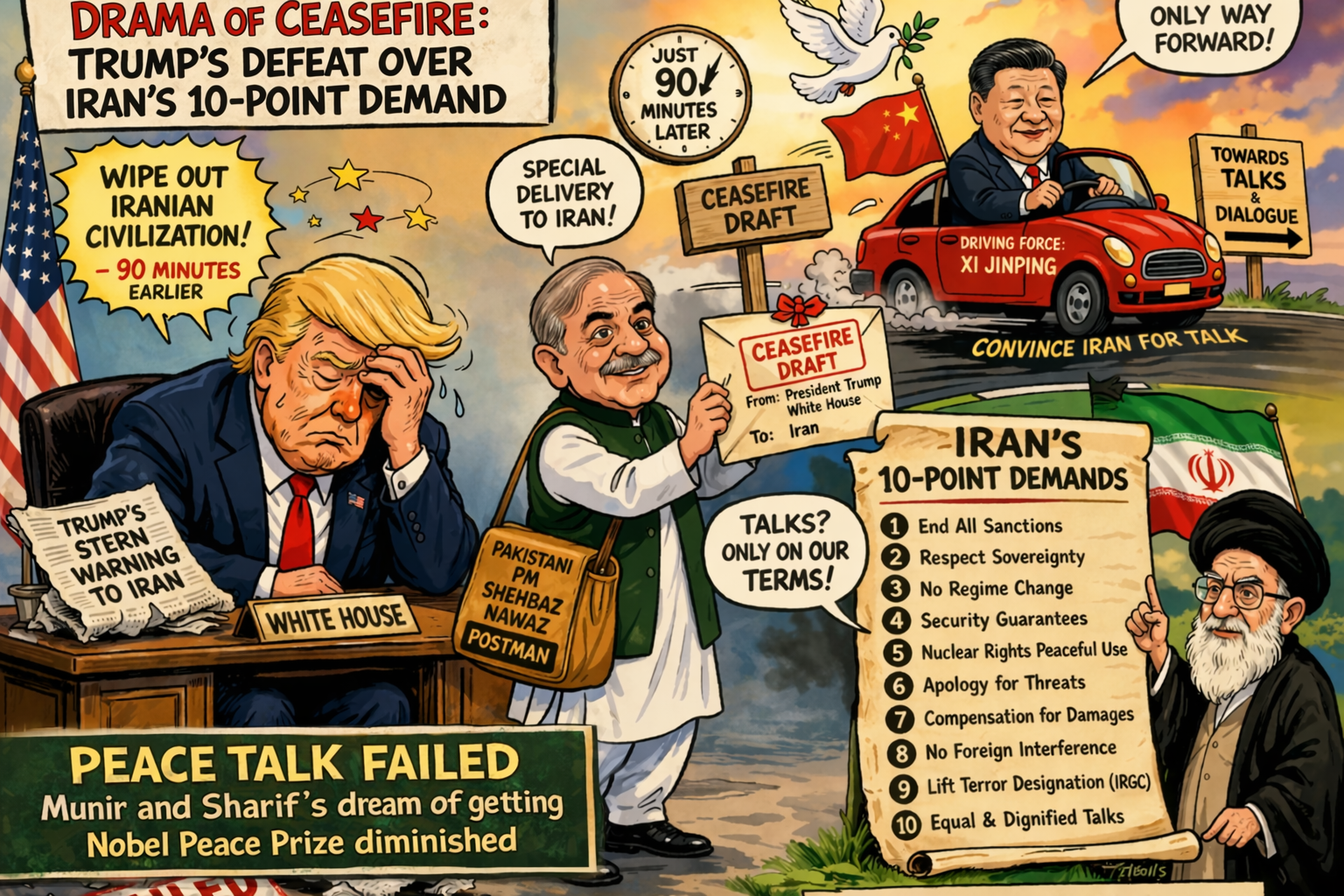
In contrast, the reported preference by Donald Trump to consider Pakistan as a potential host drew criticism in international discourse. Questions around Pakistan’s counterterrorism credibility—frequently debated in global policy circles—shaped how different stakeholders assessed its neutrality. For Pakistan’s leadership, including Asim Munir and Shehbaz Sharif, involvement in such a high-profile initiative represented an opportunity to project diplomatic relevance and strengthen its global image. In public narratives, participation in a successful peace process is sometimes associated with aspirations for prestigious international recognition, including honors like the Nobel Peace Prize. However, the collapse of the talks ultimately diminished any symbolic gains that might have emerged, reinforcing skepticism about Pakistan’s ability to function as a trusted intermediary in conflicts defined by deep-rooted mistrust.
The attempted diplomatic engagement itself must be understood within a broader framework of political signaling and historical grievance. Iran approached negotiations with caution, shaped by its experience of sanctions and previous breakdowns in agreements with the United States. Israel, facing persistent security concerns, maintained a firm stance against concessions that could weaken its strategic deterrence. The United States, under Trump, combined pressure tactics with unpredictable diplomatic overtures, creating an environment where intentions were often unclear. This combination of factors produced a structural imbalance in expectations, making it extremely difficult to establish the trust necessary for meaningful dialogue. Instead of functioning as a confidence-building process, the talks became a stage where competing narratives played out without convergence.
The growing focus on the Strait of Hormuz has intensified debate over whether Iran is leveraging its geographic advantage as a form of strategic pressure against the United States. While some analysts describe this as “blackmail,” others frame it as a deterrence tactic—an attempt by Iran to counterbalance military and economic pressure by signaling its ability to disrupt one of the world’s most critical energy corridors. The strait carries a significant share of global oil exports, making it a highly sensitive in international trade.
If Iran were to block or significantly disrupt traffic through the Strait of Hormuz, the consequences would be immediate and severe. Asian economies, particularly China and India, would be among the hardest hit due to their heavy dependence on imported energy. A sudden spike in oil prices could trigger inflation, slow industrial output, and destabilize financial markets. Western countries would also face serious repercussions, including market volatility, rising fuel costs, and pressure on already fragile economic systems.
This interconnected vulnerability explains why global leaders often push for de-escalation during such crises. There is a strong incentive to prevent conflict from reaching a point where energy flows are disrupted. At the same time, any aggressive move by Iran could risk international backlash and further isolation, potentially backfiring on its own economy.
Strategic responses associated with Donald Trump, including military deterrence and sanctions, aim to maintain open shipping lanes but carry escalation risks. Even limited confrontation in the region could send shockwaves through global energy markets, highlighting the fragile balance in stability.
The possibility of conflict spillover into Libya adds another layer of complexity, although claims regarding sustained Israeli military operations there remain contested and not widely confirmed. Libya’s internal divisions and history of external involvement make it vulnerable to becoming a proxy arena, but definitive conclusions require careful scrutiny. Nevertheless, the perception of expanding conflict zones contributes to a broader climate of instability, where multiple regional tensions risk converging into a more extensive geopolitical crisis.
Economic consequences of such instability would be far-reaching. Asian economies, particularly those heavily reliant on imported energy, would face immediate challenges in the form of inflation, currency volatility, and disruptions to industrial production. Nations such as India, Japan, and South Korea are especially sensitive to oil supply fluctuations. Western economies, including the United States and European countries, would also experience financial market instability, increased defense expenditures, and pressure on consumers. Global supply chains—already strained by previous disruptions—could face renewed uncertainty, affecting sectors ranging from manufacturing to transportation.
International responses to these developments highlight a fragmented global order. European nations generally advocate for multilateral diplomacy and de-escalation, while regional actors prioritize their own security interests. Major powers such as China and Russia observe the situation strategically, balancing opportunities for influence with the risks of instability. The absence of a cohesive global response underscores the weakening of traditional diplomatic institutions and the increasing prevalence of transactional, interest-driven foreign policy approaches.
As the situation intensified, developments on the military front added urgency. Following escalating hostilities, a temporary ceasefire between the United States and Iran emerged after a period of heightened confrontation. Statements attributed to Donald Trump, including warnings of severe consequences if demands were not met, drew strong reactions domestically and internationally. Iranian leadership, associated with figures such as Mojtaba Khamenei, indicated that any pause in hostilities would be conditional and not indicative of a permanent resolution. Tehran continued to emphasize demands related to sanctions relief, compensation, and long-term security guarantees.
Reports of strong rhetoric, including references to large-scale destruction, sparked significant debate within the United States. Lawmakers such as Patty Murray and Chris Coons expressed concern about the implications of such statements, while others, including Bonnie Watson Coleman, raised constitutional questions regarding presidential authority and responsibility. These reactions illustrate the tension between executive power in matters of national security and the legal and ethical constraints that govern its use.
The broader implications of such rhetoric extend beyond immediate policy considerations. In a nuclear age, language itself becomes a strategic tool, capable of shaping perceptions, influencing adversaries, and affecting global stability. References to large-scale destruction evoke historical precedents such as the atomic bombings during World War II, underscoring the gravity of such statements. Even when interpreted as strategic signaling, such rhetoric carries the risk of miscalculation, narrowing the space for diplomatic de-escalation.
Assigning responsibility for the situation remains complex. Trump’s approach is often characterized as unconventional, blending assertive negotiation tactics with unpredictable messaging. Iran’s regional policies and resistance to external pressure contribute to ongoing tensions, while Israel’s security-focused strategy limits flexibility in negotiations. Pakistan’s role illustrates the challenges faced by states seeking to enhance diplomatic standing amid scrutiny, while the hypothetical role of India highlights how perceptions of neutrality can influence expectations.
Ultimately, what emerges is not simply the failure of a single peace initiative, but a broader reflection of the evolving culture of global politics. Diplomacy increasingly operates in a space shaped by perception, power projection, and competing narratives, where trust is difficult to establish and sustain. The consequences of this shift extend far beyond any individual leader or nation, shaping a geopolitical environment in which the boundary between negotiation and confrontation remains fragile and uncertain.