BY Prashant Shah
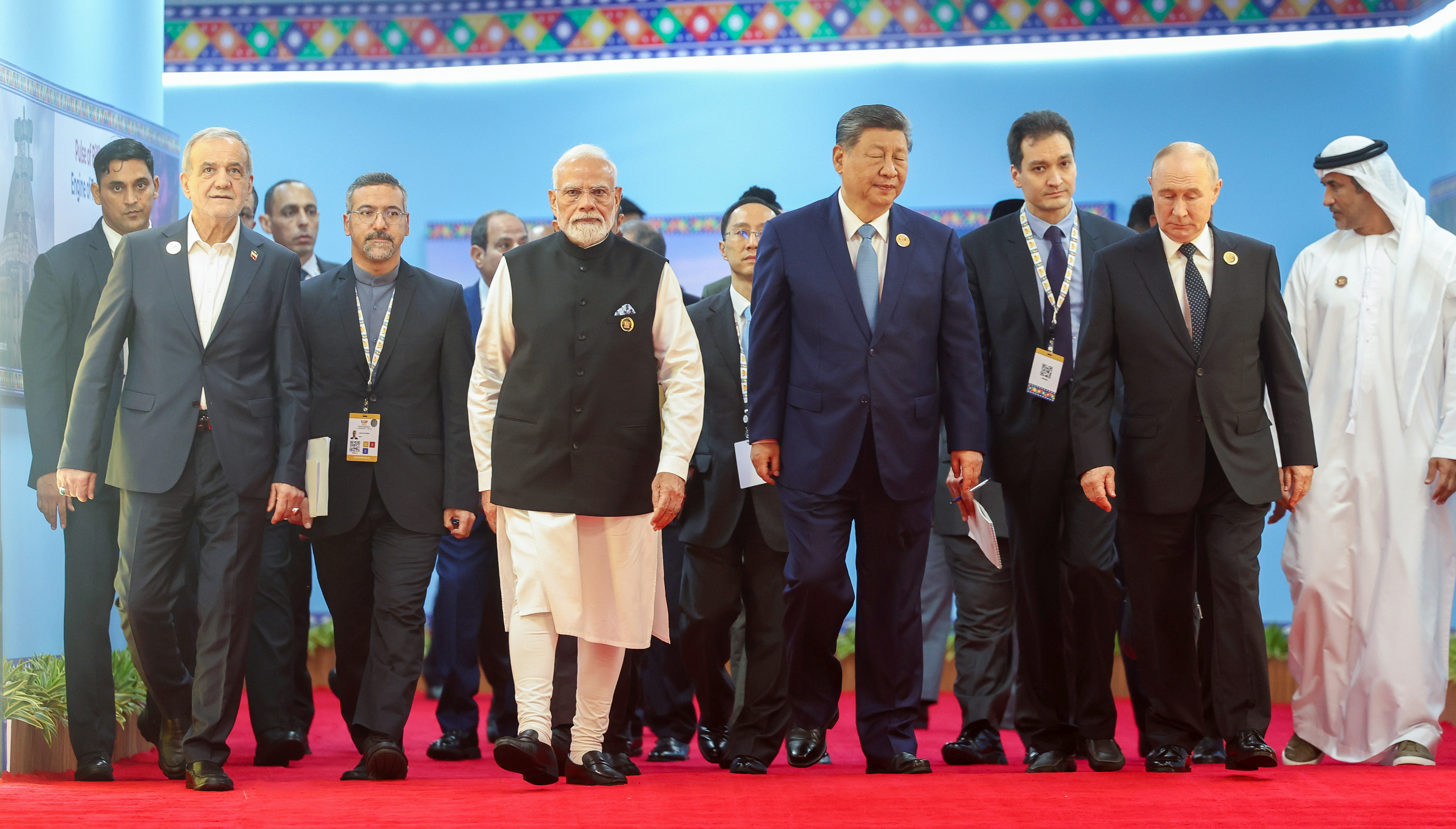
The 18th BRICS Summit in New Delhi must be judged as more than another diplomatic gathering. Its greatest achievement was not merely bringing together Brazil, China, Russia, Egypt, Ethiopia, India, Indonesia, Iran, Saudi Arabia, South Africa and the United Arab Emirates, along with 10 partner countries, but demonstrating that nations separated by geography, ideology, political systems and strategic interests can still find common ground.
That achievement reflects Prime Minister Narendra Modi’s leadership, vision and determination to make BRICS a stronger voice for the Global South. Despite serious geopolitical disagreements, the participating nations reached consensus and adopted the New Delhi Declaration on the very first day. The two-day summit, with 32 delegations representing member states, partner countries, regional and international organizations, sent a powerful message: dialogue is still possible in a world increasingly poisoned by confrontation.
But the real test of BRICS begins now.
The greatest danger confronting humanity is no longer terrorism in isolation. It is the terrifying nexus that can emerge when terrorism becomes a political instrument, religion is manipulated to justify violence, governments exploit public fear for strategic advantage, and artificial intelligence provides extremists with a frightening new weapon to manufacture hatred and spread lies.
The New Delhi Declaration’s unequivocal condemnation of terrorism is therefore especially important. Terrorism must never be associated with any religion, nationality, civilization or ethnicity. Religions do not commit terrorism; individuals and organizations do. Yet history has shown how extremists and political actors deliberately exploit religious identity, grievance and fear to recruit the vulnerable and turn faith into an instrument of violence.
Equally dangerous is the political double standard surrounding terrorism. A terrorist cannot become a “freedom fighter” merely because his violence serves someone’s geopolitical interests. A government cannot demand international support against terrorism while tolerating, financing or protecting violent extremists who threaten another nation. Such hypocrisy destroys trust and gives terrorism room to survive.
The conflicts and rivalries of the Middle East make the challenge even more complicated. BRICS includes countries with sharply different alliances and interests. India must therefore ensure that BRICS does not become another battleground for geopolitical rivalry, but evolves into a serious force for peace, stability, development and responsible international cooperation.
And now humanity faces an entirely new multiplier: Artificial Intelligence.
AI can generate false speeches, fabricate photographs, clone voices, produce convincing videos, translate extremist propaganda into multiple languages and target susceptible individuals with tailor-made messages. A lie that once took days to manufacture can now be created in seconds and distributed worldwide.
That is the frightening convergence. Terrorist organizations may increasingly need fewer traditional propagandists and instead rely on algorithms. A fake video can ignite communal tensions. A fabricated statement can provoke demonstrations. A false photograph can trigger violence. A local incident can become an international crisis before the truth is even established.
BRICS cannot respond to this threat with declarations alone. It must build practical cooperation against terrorist financing, extremist networks, AI-generated disinformation, digital radicalization and the criminal misuse of emerging technologies. Intelligence agencies, law-enforcement authorities and technology companies must cooperate across borders.
India, having successfully brought this diverse grouping together, has a special responsibility to lead that effort.
The central principle must be uncompromising: humanity must remain more powerful than ideology, religion, nationalism or technology.
The true measure of BRICS will not be whether its leaders can agree on trade, investment or finance. It will be whether they can agree that human life, human dignity and truth itself must never become casualties of terrorism, political opportunism, religious extremism or artificial intelligence.
That is the battle BRICS must now win — because the future of the world may depend on it